A drainage system might appear adequate in normal conditions, but a heavy storm could reveal all the weaknesses in a property’s infrastructure. Parking areas flood. Detention ponds overflow excessively. Access roads can be hazardous. Lower-lying areas can begin to gather water. The issue in a lot of cases is not just rain. It’s that the place is not equipped with the right technology to move stormwater effectively when gravity alone isn’t enough.
A stormwater lift station becomes essential. They are constructed to capture and move stormwater away from areas where the runoff naturally builds up, protecting buildings, roads utility lines, as well as outdoor spaces. No matter if the project is industrial, commercial, municipal or residential, a lift station can be a significant factor in keeping the site functional during and after the storm.
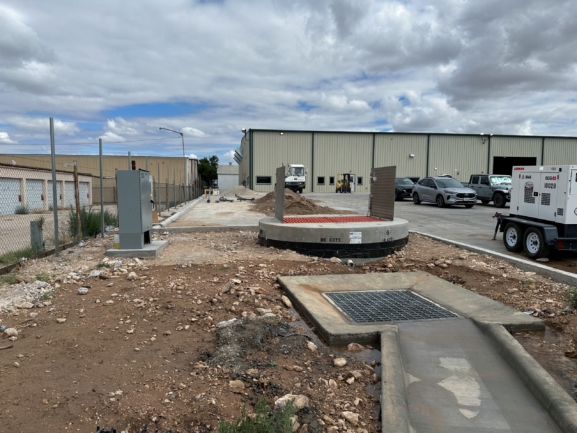
Stormwater management needs to be designed around the specific location
Each property manages runoff in a different way. A retail store with a vast parking space paved with asphalt does not behave as a subdivision for residential purposes nor will require the same requirements as an industrial site or municipal drainage project. The design of a stormwater system is affected by a range of factors, including the speed of the flow, elevation, detention needs, and discharge conditions.
Romtec Utilities doesn’t treat stormwater pumping the same way as a standard package. Each system is developed for the particular site’s pumping scenario, whether that involves controlling flooding, emptying the detention pond, directing runoff from a developed property or supporting a larger municipal drainage system. The right solution depends upon the quantity of water that needs to be transported, how fast it must move and where.
Stormwater runoff pumps go further than an individual pump within a vault
A efficient stormwater pumping station is more than a high-powered machine. It is an integrated system that combines structural, electrical, mechanical and control components in a seamless manner to control stormwater flows efficiently and in a consistent manner. To make sure that the station will perform optimally over its entire life important factors like precise pump sizing (including wet well design), advanced controls, sturdy pipes, robust power systems, and a real-time monitor are all required to work in tandem.
The best designers for stromwater are distinguished by their total system integration. A top-quality design does not simply fix an immediate drainage problem; it requires a proactive, long-term perspective. The top-tier engineering takes into account the ease of maintenance in the course of time, future site requirements and the best efficiency for operation. It is important to ensure that the system for pumping packages is able to perform under extreme weather conditions in the real world instead of relying on ideal assumptions.
Planning is essential, regardless of whether you’re dealing with torrential floods, or designing municipal systems that are at high pressure, like booster pumps for water that is clean, and where failure is not an alternative. Romtec Utilities designs stormwater systems with those practical realities in mind. They offer a variety of pumps that are designed for different applications. The pumps are accompanied by documents, training, and startup assistance to ensure the owner can effectively manage their system.
Better planning creates better flood protection
A stormwater pump station that is properly constructed can decrease risk of flooding, improve accessibility, and protect areas around it from water damage. It also makes a place more resilient by ensuring that runoff is managed efficiently and quickly during major rainfall events.
Stormwater infrastructure is easy to ignore until it breaks down. When runoff must be actively managed, a reliable stormwater lift station is a crucial investment for a developer, the property owner or a municipality. Stormwater management systems can help make a property more efficient and safer. They can also assist it to be more prepared to deal with the changing weather conditions.