In the event of emergencies, people seldom have the time to sit and think carefully about where to take the next step. In circumstances that are stressful. This is especially the case when large structures are involved, such as offices, warehouses and apartment complexes. In emergency planning, clarity can cut down on confusion.
Plans for evacuation and emergency interventions which are well-designed offer visual aids to help personnel, occupants security teams, firefighters and occupants respond faster and more efficiently. They aren’t made of a wall-mounted paper. They are designed to be useful safety tools that can be used during real-life emergencies.
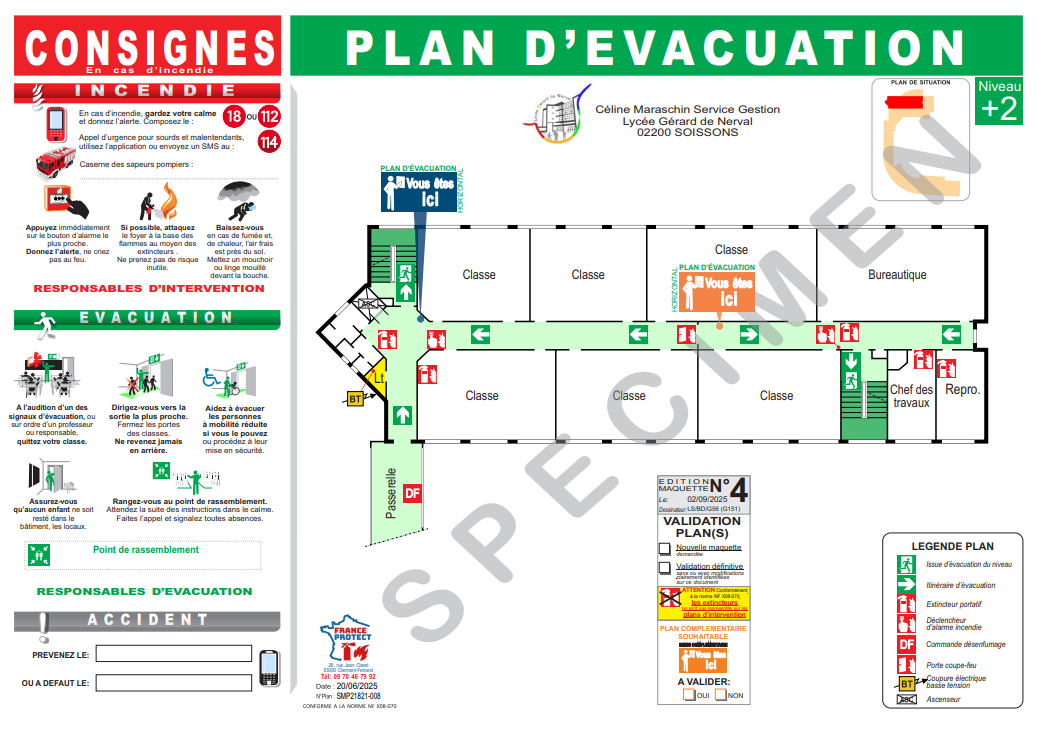
Public and commercial establishments across France are increasingly aware of the necessity to ensure that emergency documents are up-to-date and easily readable, clearly placed and tailored to the specific building.
The purpose of evacuation and intervention plans are different.
Many people believe that all fire safety plans serve the same purpose. But they are not.
A plan to evacuate Lyon buildings is intended for visitors, employees customers, contractors as well as occupants in the property. The goal of the plan is to ensure that all people are able to safely leave the building in the event of an emergency.
Typically, these plans list the exits and stairways as well as evacuation routes and emergency equipment. They can also include alarm systems. A proper layout is essential because occupants need to locate the information in a hurry during stressful situations.
The Clermont Ferrand intervention plan however, is crafted to meet the specific needs of firefighters, security personnel and emergency personnel. It has more details concerning emergency access, shutoffs of utilities, circulation zones, security systems, technical rooms and sensitive areas within the building. Both plans support more secure emergency response.
It’s more vital than people realize that placement and visibility are the most important factors.
Plans for fire safety are only useful if they can be seen and understood quickly. Plans behind doors that are too high, difficult to read, outdated or poorly lit can do not have much value in an emergency. Planning for security against fire is a challenging procedure that requires both content and location. To get more information, click here plan intervention Clermont-Ferrand
Usually, evacuation plans are installed in the areas where the occupants spend most of their time, such as in lobbies and entrances. Teams for emergency response often put interventions plans close to access points to the fire department, technical areas or security stations. This allows them to quickly access crucial information about buildings upon arrival. Professionally designed plans enhance accessibility, readability, as well as overall coordination for emergencies throughout the building.
The updated regulations are altering expectations about fire safety.
The fire safety regulations that apply to public access buildings are constantly changing in France. Prior to this, buildings were exempt from certain plans, many Category 5 ERP buildings are now required to have evacuation and intervention papers regardless of the design. In order to ensure compliance with new requirements, companies property managers, trustees and businesses as well as public facility operators need more professional help.
Clermont’s properties need to have an intervention and evacuation plan implemented if they wish to remain compliant and safe. Additionally, they should be prepared for any future modifications. Updated documentation proves professionalism for emergency services, inspectors and the occupants.
Emergency Responders Rely on Accurate Building Information
Firefighters are often forced to enter structures that are unfamiliar under difficult conditions such as heat, smoke and limited visibility. A thorough intervention plans helps emergency teams better understand the structure.
The plan should comprise the emergency exits, shut-off points for utilities, compartmentalization zones and technical rooms. The plan could also include smoke extraction systems.
This information helps responders make faster operational decisions while improving the efficiency of their intervention overall. For large buildings or properties with more complex structures, organized and up-to-date intervention documentation can help improve emergency coordination.
Regular Updates Keep Plans Relevant
Buildings change over time. Office changes, such as remodelling, wall modification and relocations of equipment, and modifications to circulation routes, could occur. These changes could create inadequate fire safety programs If they’re not regularly updated. An outdated evacuation route or missing technical detail could create confusion during an emergency.
Regular review is essential to ensure that emergency plans are in line with the latest safety protocols and building layouts. Many companies now view periodic updates as an important element of risk management rather than as a only once-a-year administrative burden. Professional providers help businesses with monitoring these updates, while making sure they are in compliance with the most current standards and best practices.
Plan for the Safety of Fire – A Clear Approach Creates Safer Environments
It is important to remember that fire prevention doesn’t end with alarms or extinguishers. Effective safety planning can create environments that allow people to react calmly and effectively in the event of an emergency.
Employees are more comfortable when the emergency procedures and their organization is clearly evident. Visitors benefit from clearly marked routes for evacuation. Emergency responders are able to gain access to important information about the building. Fire safety planning is an expert service that is beneficial to all. France protect securite helps organizations across the Auvergne Rhone-Alpes region make safer industrial, commercial, and public environments through well-designed evacuation and intervention plans.
The importance of being prepared during emergency situations
Emergency situations are seldom warned of. It is the preparation that determines the efficiency of a building’s response to a crisis.
Safety is improved by having a well-prepared Fire intervention plan in Lyon as well as an organized Evacuation Plan for Lyon facilities and services, as well as a precise plan for the preparation of an intervention and evacuation plan for Clermont.
The most current, well-placed and legible plans reduce confusion and increase coordination in response. They also facilitate safer evacuations, both for emergency personnel and those who are occupants.
Maintaining a clear emergency plan is more than just meeting the rules. It’s about improving safety, protecting people, and making safer places every day.